
Mobile surveillance where you need it
Security requirements do not always suit a permanent camera installation. Temporary installations may need to be active for only a few hours. A remote location may have no fixed power or network connection.
Mobile surveillance gives organisations a way to monitor these locations without installing a permanent system. Its value depends on getting the basics right: useful images, reliable connectivity and a clear process for responding when something happens.
Monitor your sites remotely
Remote access lets your team view live and recorded video from a control room or mobile device. They can check activity across several sites without having to visit each one.
When an alert comes in, an operator can review the footage and decide what action is needed. That might mean contacting someone on site, sending a member of staff or confirming that no intervention is necessary. Having that view helps teams make informed decisions and focus their attention where it is needed.
Deploy cameras as requirements change
At a temporary site, the areas that need coverage can change quickly. An entrance may move, equipment may be relocated or a new phase of work may create a different risk.
A mobile surveillance vehicle can be positioned to cover the immediate requirement and moved as the site develops. With the right preparation, it can be operational within hours. The practical details still matter: camera positions, power, connectivity and access all need to be considered.
This flexibility is useful in both built-up and remote locations. Where fixed infrastructure is unavailable, the system needs a suitable independent power supply and a network connection that can support the intended use.
What makes mobile surveillance effective?
The first job of any surveillance system is to capture useful video. An operator needs enough detail to understand what is happening and, where required, identify the people or vehicles involved.
That takes more than choosing a camera with a high resolution. The distance to the subject, viewing angle, lighting and movement all affect the result. Camera selection and placement should follow the operational requirement.
Use analytics to draw attention to activity
Operators cannot watch every camera continuously. Video analytics can help by flagging defined activity, such as someone entering a restricted area or remaining near an entrance for longer than expected.
Processing video within the camera allows some events to be detected locally. Depending on the system, a detection can raise an alert, start a recording or trigger a connected speaker. This gives operators a prompt to review the footage and assess what is happening.
These functions need to be selected and tested for the conditions in which they will operate. An alert is useful when it gives the team relevant information and a clear opportunity to act.
Match the camera to the conditions
A site that is easy to monitor during daylight may look very different after dark. Low-light cameras can retain useful detail as light levels fall, while additional lighting may be needed for particular tasks.
Thermal cameras provide a different view by detecting heat rather than visible light. They can help detect people in darkness or identify temperature changes in equipment. They do not provide the same identifying detail as a conventional camera, so the two may be used together.
The aim is to give operators the information they need throughout the hours the site is monitored.
Support events and crowd management
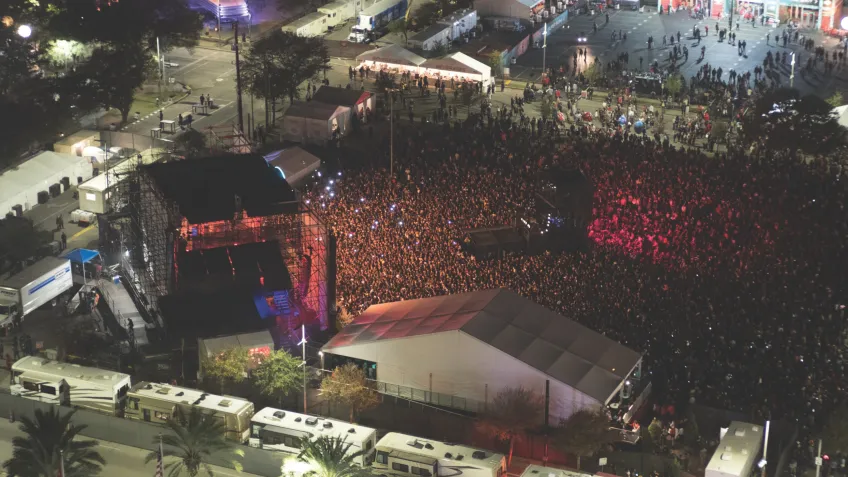
At an event, entrances, queues and gathering areas can become busy in a short space of time. Temporary cameras give the event team a wider view, helping them spot congestion and check reports from staff on the ground.
Live video can help operators decide where to send stewards or whether an access route needs attention. If the layout changes, the cameras can be repositioned to cover the new arrangement.
For construction sites, remote locations and events alike, effective mobile surveillance brings together cameras, connectivity and the people responsible for responding. Planning all three makes the system useful in day-to-day operation.
Discuss your requirements
Panoptech can help you plan an Axis video system around your site, its connections and the way your team works. Contact sales@panoptech.co.uk to discuss your requirements.